What 34 Years at Cox Taught Dallas Clement About Making Big Bets

Recap from ATLeaders Lunch at Cox Enterprises, April 14, 2026

Got to go listen in to a fireside chat with Katie Kirkpatrick of the Metro Atlanta Chamber and Dallas Clement this week at the ATLeaders lunch hosted at Cox Enterprises. Dallas is the President of Cox and has been there for 34 years. That's not a typo. Thirty. Four. Years. Started in 1990 and has been in the room for every major inflection point the company has hit since.

The whole conversation was gold. Here's what stuck.

Day one, halo vest

Not a metaphor. Dallas literally showed up to his first day at Cox recovering from a bike accident, wearing a halo vest. That kind of tells you everything about the guy.

Since then, he's moved through the Cable Group, the Time Warner merger in '95, taking Cox Communications public, running investor relations, leading strategy, serving as CFO of AutoTrader and then Cox Automotive, and now running the whole company for the last decade.

That's a resume built by showing up, including when it's hard.

Dyslexia shaped how he leads

One of the most honest parts of the conversation. Dallas talked openly about how dyslexia forced him to learn differently. He comes at problems from multiple angles. Asks more questions than most people are comfortable with. Builds strong foundations before he moves fast.

He doesn't treat it like a limitation. He treats it like his leadership superpower. And it shows.

His hiring framework reflects the same thinking. He evaluates on "what and how." The "what" is vocational skill. The "how" is whether someone can actually be a boundary partner, someone who works well across teams and relationships. Simple, but I loved it.

They killed sacred cows and it worked

Cox stepped away from broadcast TV in 2019. Then they let go of cable, selling to Charter. These were not small moves. Cable was the business for decades.

But Dallas was clear about the logic. They were at a scale disadvantage. Competitors were five times their size. Instead of spreading capital thin trying to compete, they refocused on higher growth opportunities. After the Charter deal, Cox became the largest shareholder of the combined entity, secured three board seats, and kept a significant Atlanta headquarters presence.

This is a "burn the ships" move at scale. I wrote about this years ago, the idea that sometimes the smartest thing you can do is stop, turn around, and run in a different direction. It's not retreating. It's advancing somewhere better. Hearing about a company the size of Cox do it at this level was wild to hear.

The philosophy I keep mulling over

The decision framework Dallas kept coming back to: "What's the worst thing that could happen?"

If he's comfortable with the downside, he moves forward.

That one has been rattling around in my head since I left the lunch. It's such a simple question. But it's also a really honest one. Am I actually living by that framework? Or am I letting fear of made up worst case scenarios keep me from making moves I know are right?

It was challenging in the best way. The kind of question that makes you want to go audit a few decisions you've been sitting on.

One thing about Cox Automotive that blew my mind

Cox is processing 70 to 80 percent of EVs through Manheim auctions.

Let that land for a second. What started 60 years ago as local automotive media advertising is now handling the majority of EV auction flow in this country. They're building EV battery condition ratings, creating a secondary market for batteries, running recall processing for OEMs, hosting pre market new cars for manufacturers, and growing a fleet services and mobility group on top of it.

Side note: Steve and I recently bought an EV and we love it. So hearing just how deeply Cox is plugged into that ecosystem hit different. It felt like we were part of this whole quiet infrastructure shift without even realizing it.

Dallas also had a really sharp thesis on autonomous vehicles. Fewer people will own cars, but total miles driven will go up. That creates massive opportunity in fleet services, maintenance, and logistics. Cox is quietly setting up to own that shift.

Clean tech is the next chapter

And in case you're wondering, yes, clean tech is very much a Cox thing too. Cox Conserves is a huge part of it. They already have zero waste to landfill designation, meaning they divert 90% of waste. But they're going further. The team analyzed 99 segments, filtered them against Cox's capabilities, and narrowed to 8 to 10 broad sectors they want to pursue over the next decade.

One that really blew my mind: controlled environment agriculture. Who would have thought Cox now has a farm where they're doing regenerative farming? They acquired BrightFarms and invested in Mucci Farms. It's not where you'd expect Cox to play, which is exactly why it's interesting.

The family business advantage

Governor Cox's original will basically said: do right by employees, customers, and communities. Dallas referenced it naturally throughout the conversation. It's not a poster on the wall. It's the actual operating system.

This reminded me a lot of what David Cummings has written about over and over: the companies that build around real core values are the ones that hold up over time. Values aren't nice to haves. They're decision making tools. Cox is proof of that playing out over a century plus.

That long-term vision also gives them flexibility most public companies just don't have. They can maintain control, merge down to a minority stake, or exit entirely, all based on what's right for the long term. No quarterly earnings pressure dictating strategy.

My takeaway

Dallas Clement is proof that you don't have to be the loudest person in the room to make the biggest moves. His approach is methodical, curious, and grounded in pattern recognition built over decades.

For founders, the lessons are real. Know your scale disadvantage. Be willing to walk away from legacy businesses, even the ones that built you. Stay anchored to your core values when things get hard. And always, always stress test your downside before you move.

Big thanks to the ATLeaders crew for putting this together, and to Cox for hosting.
Product Market Fit Is Critical for Growth

From Winning By Design

From Winning By Design

I've been reading about Go To Market strategies and the best marketing plans and product development and the list goes on. One thing I keep coming across is the topic of Product/Market fit. 

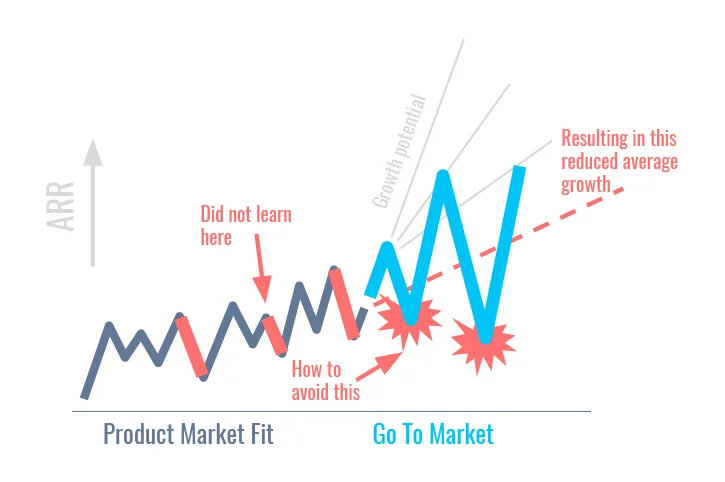
Winning by Design has a great reference for why Growth matters in the SaaS industry and I particularly liked their thoughts on Product/Market Fit: 

Keys to growth you have to identify during Product/Market Fit:

  1. WHAT is the value proposition that prioritizes the solution offered
  2. WHO is the audience that has a real problem and is willing to take action
  3. HOW to get to the audience with the real problem in an efficient and effective way

If you don't clearly establish Product/Market fit, when you Go To Market, your rate of growth will decrease significantly. 

What else? What other thought do you have on establishing the What, Who and How of your market? 


The Art of Krav Maga

Raise your hand if you've heard of Krav Maga! 


No? 


Me either. I've just found out about this activity from a fellow Global Shaper here in Atlanta and I'm inspired. Every meeting members share what we call "Mountain Talks". (I can't remember where this came from, so please forgive me, but it's one of our monthly traditions). Each Mountain Talk consists simply of one member sharing something—anything really—that they are passionate about or simply have a bit of knowledge on. Other members then have a minute to ask questions about the talk and then everyone writes thoughts/questions on a piece of paper for the presenter to keep. This week, one Shaper shared on Krav Maga and I'm quite inspired by the concept. 

Krav Maga is a self-defense system developed for the Israeli military focusing on real-world situations with techniques sourced from boxing, wrestling, aikido and judo. More than that though, it's making people stronger and safer. 

It's a way to 1.) strengthen your body, 2.) sharpen your mind, and 3.) boost your confidence. My fellow shaper shared that it's about self-empowerment and taking control of your life. 

The Shaper went on to reference a Huffington Post article: “self-empowerment [comes] from being “hungry”. Hungry to succeed, hungry to achieve more in life, hungry to do the right thing, and hungry to overcome any challenges that come my way.”

“Everyone’s fighting something.”
– Fit to Fight motto

This is absolutely true. We're all fighting something. The corporate latter. Self Doubt. Internal demons. Spiritual demons. And yes, even bullies. There are MANY ways to combat these obstacles, but I'd like to highlight 4 practical teachings of Krav Maga that my fellow Shaper shared from the perspective of self-defense. 

  • Be aware of your surroundings
  • Fighting = last resort
  • Stay grounded – mentally and physically
  • Talk with your hands up so you’re “fight ready”

I still have many things to learn about Krav Maga and am not even close to being an expert, but I hope the next time I'm in a situation in need of a bit of self-defence, I'll think back to these four helpful tips and be empowered! 

Here's to self-empowerment! 

What good was, is, and will be?

Photo by Plywood Presents

Photo by Plywood Presents

I had a good conversation today with a friend about happiness and whether or not happiness is the end-all, be-all goal of living.* When riding the train to my next meeting, my thoughts casually flowed onto the topic of goodness

I'm not sure if this is how it works for most people, but for me, when one topic/theme/idea comes to my mind, it seems to show up EVERYWHERE around me.

Case and point: 

  • I was listening to a sermon recently about Good vs. Evil. 
  • I've recently chatted about what it means to "be good" (in a conversation NOT initiated by me). 
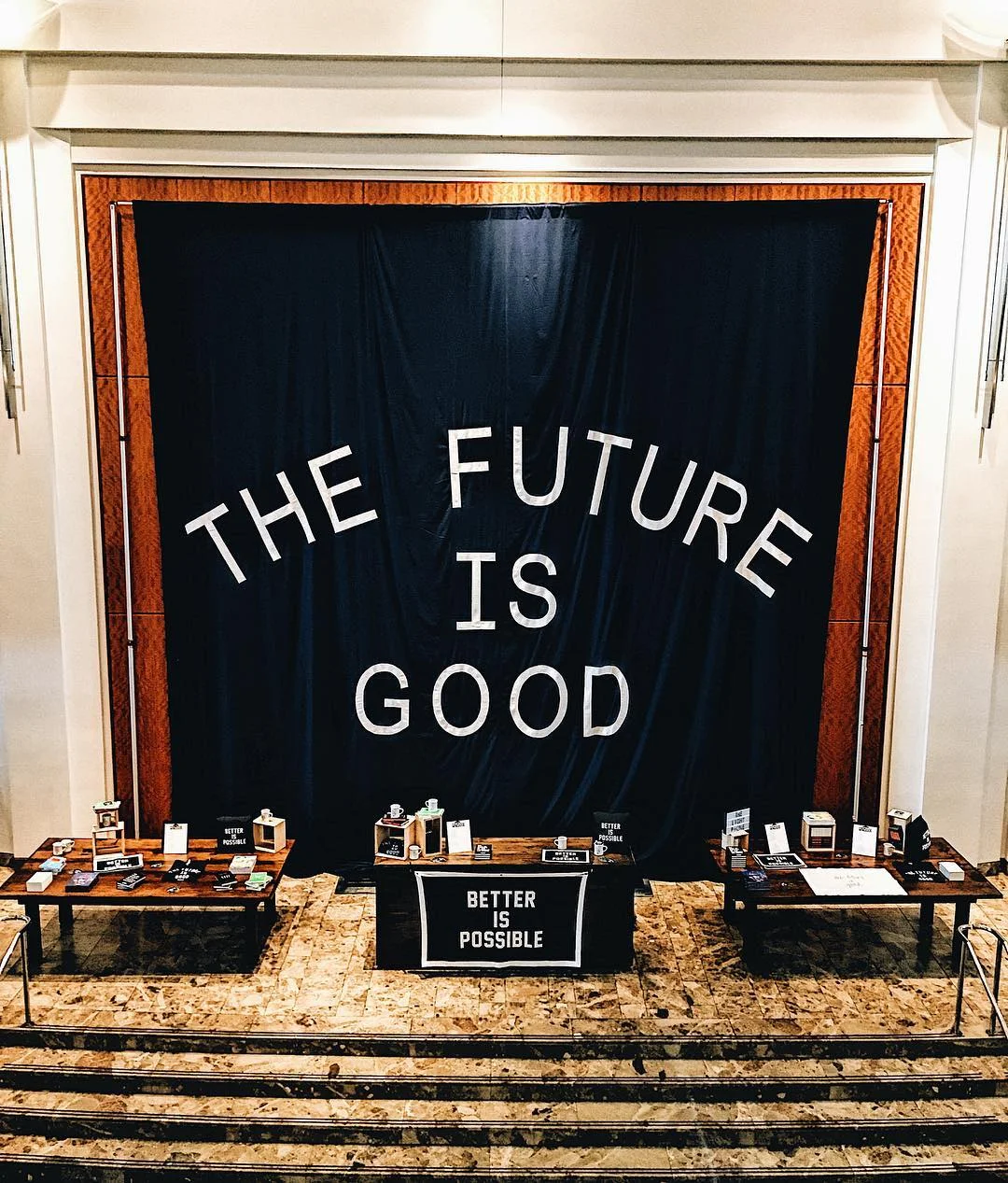
  • ...and at a recent event I attended, Jeff Shinabarger talked a lot about the Future Being Good

Because "good" really is all around me right now, I thought it quite appropriate that today I write about one of Jeff's points. One question he challenged attendees to answer was: 

What can I edit today that may help create a better tomorrow? 

So, what do you say? Do you know what you'd edit? What do I say? Honestly, I'm still trying to think about it. I've decided I want to take this seriously and three questions I'm going to ask myself every day this week to figure it out are: 

  1. What good has happened? 
  2. What good is happening? 
  3. What good will happen? 

Feel free to also join me! Whether you're on the train on your morning commute or taking an afternoon snack break, I'd encourage you to think through these questions and dwell on how you can make a better tomorrow. I do believe that our future is GOOD, but it will take our continued effort and investment to make it that way. 

Wish me luck!  

*While this isn't the topic I'm writing about today, I'd love to talk more about this with anyone who's interested.

Plywood Presents 2017

IMG_7484.JPG

Today (and yesterday evening) I attended a conference called Plywood Presents.  I might as well lay all the cards on the table now and say if you didn't attend this event, you MIGHT have missed out on lots of gold nuggets...and I do mean LOTS! 

The main expectations I went into this event with were to learn and to be inspired. Consider my expectations met. I met AMAZING new people, was challenged in my thought process and learned from fearless people doing epic work. These leaders included: 

  • Joel Cohen—Emmy Award Winning Writer for The Simpsons
  • CJ Casciotta — Writer, Director and Make Believer
  • Flynn Coleman—Human Rights Attorney and Founder of Malena
  • Dallas Clayton—Children's Book Author, Illustrator, and Muralist
  • Mimi Valdes— Chief Creative Officer, i am OTHER & Executive Producer of Hidden Figures
  • Horst Schulze—Former President of The Ritz Carlton: Luxury Hotels and Resorts
  • Jeff Shinabarger—Founder of Plywood Presents
  • Christena Cleveland—Social Psychologist, Author & Professor @ Duke University Divinity School
  • Jason and Danica Russell—Creators of Invisible Children, Founders of a Little Radical
  • Eryn Erickson—Founder of So Worth Loving
  • Branden Harvey—Storyteller, Photographer, Founder of Sounds Good Podcast & Good Newsletter
  • Inky Johnson—Inspirational Speaker, Former University of Tennessee Football Player
  • Kaiwei Tang—A designer and entrepreneur, Creator of Light phone

I'm can't wait to share more about what I've learned from these genuine people, but until then, I'll share two big takeaways from the event; 

Everything you
work for
is possible

and

The Future
is Good

Learn. Learn more. Share it. and then learn some more.

I've been reading a lot lately. Lots about marketing. Lots about text messaging within a platform. Lots about leadership. JUST LOTS. I recently went to an event for all of the amazing Leadtime Interns with our boss, David Cummings. He shared some BIG nuggets of wisdom and two of them are: 

1. Never. Stop. Learning. 

2. Share what you learn! 

So, that's what I'm here to do. Start talking about the things I learn. 

First up: Have you heard about The Hustle? If not, you should check it out. Daily emails (I KNOW, but they are short). Good content. And the sign-up process was hilarious.

 You can use my ambassador link here

Cheers!